Showing posts with label Lehane. Show all posts

Friday, January 09, 2015

Scooter & Hum's Top Five Books of the Year 2014


The eighth addition of the "Scooties" books of my year was marked by trilogies and a dearth of time to invest in as much reading as I would've liked. Of course, as usual, a few tales picked me up and shook me.

Without further ado ...

#1: “Girl with the Dragon Tattoo,” by Stieg Larsson

What I Say Now:

This novel passed the border from engrossing to mesmerizing, with Larsson’s seamless merging of the Blomkvist and Salander storylines halfway through the book being a true feat of literature. Larsson’s prose is stilted and factual—belying the journalist he was in life—but the absorbing mystery of the story steamrolled any potential issues with translation. Lisbeth Salander is hailed in some quarters as the most fierce and complex heroine in the history of literature, and it is her intricate, many-edged psychology that truly powers the book, which features one of the most memorable closing lines I’ve read: “She tossed Elvis into a dumpster.”

Passage to Remember:

“An unloved girl with odd behavior … a taciturn girl with hostile vibrations.”

“Blomkvist had opened the door to hell.”


#2: “White Plague,” by Frank Herbert

What I Say Now:

This 30-year-old tour de force builds a steady momentum, spreading like the virus it tracks throughout the plot. With shifting perspectives, it can be difficult to keep characters straight, but Herbert reels you in with subtle humor and manages to eclipse even the political and societal reverberations described throughout with a walloping conclusion. Like Larsson, Herbert quietly builds a story that runs on—and pays homage to—girl power, long before the Spice Girls stumbled into the spotlight.

Passages to Remember:

“Every outrage has its own euphemism, Enos.”

“ … the essence of diplomacy—creating acceptable solutions out of lies?”

“The failure of civilization can be detected by the gap between public and private morality. The wider the gap, the nearer the civilization to final dissolution.”


#3: “Revival,” by Stephen King

What I Say Now:

The King of foreshadowing hits his trademark hard in this one. While channeling his personal stance on religion in the form of “The Terrible Sermon,” King makes the audience wait for the creepy shit to get rolling with the minister. When it finally arrives, the payoff is well worth the suspense, as he paints a scene on par with any horror he’s described during his illustrious career. Somehow King has managed to forge new ground here by intertwining questions of faith and the politics of religion with a coming-of-age tale that deals with the consequences of innocence truly and irrevocably lost.

Passages to Remember:

“I muse on that, sometimes, Jamie. When I can’t sleep. How a little paint can make shallow water seem deep.”

“I remember sunsets as red as the blood on my father’s knuckles, and how that makes me shiver now.”

“He spoke with the patience of a true believer. Or a lunatic. Maybe there’s really no difference.”

“I thought of how life had been before I realized I was a frog in a pot.”


#4: “A Short History of Nearly Everything,” by Bill Bryson

What I Say Now:

It took me quite a while to slog through this one, but Bryson did a pretty good job of taking textbook-y material and making it readable, with a few comedic wrinkles sprinkled in. I will say it that it made me feel a little bit smarter by the end of it, which is no small feat.

Passages to Remember:

“It is a curious feature of our existence that we come from a planet that is very good at promoting life but even better at extinguishing it.”

“There seemed to be a mystifying universal conspiracy among textbook authors to make certain the material they dealt with never strayed too near the realm of the mildly interesting and was always at least a long-distance phone call from the frankly interesting.”

“It’s an unnerving thought that we may be the living universe’s supreme achievement and its worst nightmare simultaneously.”

#5: “Slow Getting Up,” by Nate Jackson

What I Say Now:

Jackson’s hilarious, revealing and thoughtful autobiography peels back the façade of modern-day pro football. From painkillers to sexcapades to Cognac on the sideline, he destroys the romanticism of the game, shedding light on how players must assimilate or disappear. He stops short of diming out specific players at times, but he eviscerates former Denver coach Josh McDaniel. The book has some repetition and a few mistakes, but overall this was a clever tale, told from the perspective of the guy whose NFL existence is decided week to week, far from the glow of ESPN and fantasy football.

Passages to Remember:

“In the NFL, you are alive until you are dead. There is no in between, and no way to put yourself on the other side mentally. You fight every day to keep your job by convincing yourself that you belong. And every day you return to work and see your name still posted above your locker is proof that you deserve that locker. Then one day, fate sneaks up behind you, taps you on the shoulder, and breaks your nose—or blows out your knee.
“Then it’s over.”

“Football players are conditioned for violence. We are at home in the melee. We may have moments of quiet reservation and doubt when lying on our living room couches, but on the field we are pulled toward the mayhem. The feel of the helmet and shoulder pads, the sound of the whistle, the taste of the mouthpiece, the smell of grass and sweat: sacraments for bloodshed.”

“One day after the next: all days the same. It’s the routine of football in the lives of football men that quiets the demons within. It’s the routine that keeps them at bay. And it is the end of the routine that we all fear.”

“Satisfied that my endless pursuit of football perfection has finally been reached, or is finally revealed as unreachable, the hand of fate steadies, lines up the scope, and pulls the trigger. No doubts this time. The sniper hits his mark.”


Honorable Mention (in 10 words or less):
“Zen of Marketing,” by Seth Godin: Fascinating and unique look at applying practical marketing applications.
“A Drink Before the War,” by Dennis Lehane: Absorbing debut novel from a promising writer who chose cinema.
“Mr. Mercedes,” Stephen King: Foray into detective genre lacks characteristic King pacing.
“Girl Who Played with Fire,” by Steig Larsson: Salander and Blomvkist return to tackle conspiracies and sex trafficking.
Divergent, Veronica Roth: “Hunger Games” Lite.
Insurgent, Veronica Roth: “Hunger Games” Lite-r.
Allegiant, Veronica Roth: “Hunger Games” Lite-est.

Tuesday, February 04, 2014

“A Drink Before The Wars” Captures Dennis Lehane Finding His Gritty Voice


“She looked into my eyes and hers were swimming with alcohol and exhaustion and ghosts. She said, ‘Civilization seems to be something we choose when it fits our purpose.’”
“Not much I could argue with there.”

“Fucking whole country’s filled with nasty, unhappy, confused, pissed-off people, and not one of them with the brain power to honestly deal with their situation.”

Having read a number of other Dennis Lehane works, I figured it was high time I took a crack at his first novel, “A Drink Before the War.” His initial foray also represented the introduction of the Patrick Kenzie-Angie Gennaro detective partnership/dynamic. Parts of their relationship reads like “Encyclopedia Brown”-meets-‘tween-flirt-paperbacks, but there are enough good parts to let you know that Lehane is a budding crime writer to be taken quite seriously.

This quick read gets a bit self-righteous on the sidebars and race talk, but Lehane is quite clever in how he weaves the plot through a number of explosive variables. “A Drink Before the War” is a bleak, pessimistic read on how big-city politics runs roughshod on the disenfranchised and marginalized in society.

Tackling gang violence, race wars, cultural chasms, political intrigue, child porn, blackmail and daddy issues feels like a bit much for a book of this scope, but Lehane doesn’t shrink from the challenge. The Kenzie-Gennaro interactions take on all sorts of submeanings, and Kenzie’s relationship with his father overhands the entire book. There’s also a well-crafted twist that succeeds in tying the entire novel together.

The result is a promising first effort, and fast-forwarding to the present day, we can see that Lehane capitalized on that promise with tremendous works such as “Mystic River” and “Shutter Island.” The author now seems engrossed with the pursuit of big-screen success, but seeing him digging into the mud that comprises his roots is a welcome throwback.


“L.A. burns, and so many other cities smolder, waiting for the hose that will flood gasoline over the coals, and we listen to politicians who fuel our hate and our narrow views and tell us it’s simply a matter of getting back to basics while they sit in their beachfront properties and listen to the surf so they won’t have to hear the screams of the drowning.”

Monday, May 24, 2010

In “Shutter Island,” Scorsese Turns Instant-Classic Book Into Potentially Epic Movie


Teddy Daniels: “Why are you all wet, baby?”

It had been a long wait to see one of my favorite recent books, “Shutter Island” by Dennis Lehane, hit the big screen. The trailer was released nearly a year ago, which prompted my excitement at the time, and learning of the involvement of near-genius director Martin Scorsese certainly only added to my interest level. The delayed release of this much-anticipated flick was a disappointment, so when I was able to take it all in at Raleighwood recently with a beer in my hand, I was admittedly near-giddy.

The ultimate setup for a letdown, yes? But no. Scorsese, Leonardo DiCaprio, Ben Kingsley and Co. more than delivered.

As much more of a psychological thriller than his customary detective stories set in Boston, Lehane arguably creates a career-defining work here, and Scorsese not only does it justice and honors, but takes it to another level. He pulls off a masterpiece of setting in this one, painting Shutter Island as an Alcatraz-like outcropping, very true to the book. In fact, most of the visual imagery and setting is almost exactly as you pictured it in your mind as you read Lehane’s words, a welcome surprise in an industry where films very rarely are able to fulfill what the book creates in your mind’s eye. Throw in an almost-perfect soundtrack that punctuates and complements the action beautifully, and you begin to see the mastery that is Scorsese.

I’ve often made it clear that I’m not a big fan of DiCaprio, and he is occasionally guilty in his role as U.S. marshal Teddy Daniels of overacting and becoming a bit of a caricature of a troubled detective. In that sense, his portrayal, along with the usage of vivid flashbacks and some irregular behavior, sap a bit of the surprise element that is inherent in this story. I don’t think I’m giving away too much when I say that the drama and tension built into the closing scenes of the movie, while very good, don’t quite live up to what was generated by the conclusion of the book. That being said, DiCaprio still does a strong job, and he’s complemented well by the once-overrated Mark Ruffalo as his slightly mysterious partner. Emily Mortimer is an inspired choice as the missing prisoner, Rachel, but, simply and honestly, Michelle Williams felt like a miscast as Daniels’s one-time love interest, Dolores Chanal.

But it is Ben Kingsley as Dr. Cawley that gives the flick its backbone and steals many of the scenes that may have faltered otherwise. Presiding over a forebidding facility that houses the most violent of the criminally insane, Kingsley is as stately as always, but also brings a taste of potential malevolence to the role. He helps to serve as the fulcrum for one of the movie’s central premises, which is the idea that once you are deemed insane, you can’t be taken seriously, no matter what you say, because the perception that you are crazy clouds and discredits both your words and actions. Likewise, however, and underneath it all, the film also could argue the opposite: that once you are esteemed to be bonafide, you can say and act insane and it will still be taken as the gospel if you are perceived to be a member of the upper crust. In this way, Scorsese challenges us to recognize that it works both ways.

I will say that a new perspective and opinion that was shared about the movie’s ending was a revelation to me, proving that sometime a fresh pair of eyes can bring up a myriad of possibilities to something you thought you knew well. And it’s also a complex, many-layered flick that begs to be pondered, thought of, marinated over and seen more than once, being that it is a piece that’s populated with many sides, angles, perspectives and facades.

Once you’ve seen “Shutter Island,” you’ll see for yourself how difficult it is to review and talk about without feeling as if you’ve given away too much. But I don’t think I’m giving away the farm when I tell you that Scorsese has done it once again, this time eclipsing a very formidable obstacle: taking a tremendous book and crafting it into a tremendous film.

Warden: “If I were to sink my teeth into your eye right now, could you stop me before I blinded you?”
Daniels: “Give it a try.”
Warden: “That’s the spirit.”

Thursday, July 16, 2009

The “Shutter Island” Trailer Is Freaking Intense -- Is It October Yet?


Shockingly, many people don’t know that “Shutter Island” was the winner of a prestigious “Scootie” as Scooter & Hum’s #1 book of the year back in 2007. Well, Martin Scorsese knows, and he acted on that knowledge by electing to turn this phenomenal book into a movie.

OK, I’m not positive that the Scootie is the reason why Scorsese is involved, but the reality is that this flick has been in the works for quite a while now—and the trailer looks f’ing awesome. Let’s just say that, judging by movies like “Basketball Diaries,” “Blood Diamond” and “Gangs of New York,” Leonardo DiCaprio has major issues with using accents in flicks. However, if you can get past that (some can’t), he’s a good fit for this film. Mark Ruffalo would appear to be ideal for his role, while Ben Kingsley is always tremendous in whatever role he’s in. Throw in rumpled-hot Michelle Williams and Kelly Leak from “Bad News Bears” (Jackie Earle Haley, who only takes on jobs where he’s tormented and disturbed now) and the cast is certainly in place, especially with Scorsese to move the pieces.

Trailers can be misleading, but my first impression was that, while the book had more of a long, drawn-out building of suspense and intensity, the movie would appear to feature both from jumpstreet. “Shutter Island” was already my favorite Lehane book, but whether it can live up to the cinematic adaptation of “Mystic River” is the biggest question here. No Sean Penn puts you behind the eight-ball pretty quick, but if anybody can do it, it’s Scorsese. Let’s just say I’m than ready to decide for myself in October.

Anyway, check out the trailer … Giddyup.

Monday, July 13, 2009

Lehane Brings Gritty And Cynical To Another Level In “Darkness, Take My Hand”


"No matter how therapeutic, there's something pitiless about wrapping up the past and tying a ribbon to it."

Not that any of Dennis Lehane’s books ever offer a puffy-clouds and pretty-dandelions feel to them, but “Darkness, Take My Hand” is arguably the darkest and grittiest of his tomes to date. The violence is a bit over the top, while the level of cynicism borders on the disturbing and existential musings ("'But we all dream of other lives, I suppose. We all want to live a thousand different existences during our time here. But we can't, can we?'") permeate the prose. There’s a depressing feel to it, with a negative outlook of community-level government ("Politics was the last great tree house, and if you got in with the best kids in the block, you could roll the ladder up on the fools below.") and all else couched amidst the brutal violence that assaults the eyes as you read.

Written in 1996, this was just Lehane’s second novel, coming on the heels of his breakthrough “A Drink Before the War.” It also represents the second in the Patrick Kenzie-Angie Genarro series, following the duo as they investigate (pro bono) murders in the old ‘hood. The deeper they dig into a pattern of violence against children that goes back decades, the more they don’t want to find the answer that is eventually revealed.

In the middle of all that, Lehane manages to drop a few insightful comments about bartending ("He had our drinks in front of us before Oscar finished his nod, and he was back at the other end of the bar before we even realized he'd been by. The definition of a good bartender.") and the confusing nature of relationships ("'But we can love more than one thing simultaneously. We're human, so we're messy.'"). Yet he veers off course at the end, with a pseudo-happy ending involving Patrick and Angie that has the feel of something he didn’t necessarily intend and will have to (and did) correct in later books in this series.

Of course, as always, Lehane manages to weave a highly readable and intense tale … making it a perfect choice for lazy late mornings on the northern coast of Jamaica, with a Red Stripe on one side, a White Russian on the other, the warm sea straight ahead and a gentle breeze at your back.

Wednesday, June 10, 2009

“Sacred” Leaves Boston—And Lehane's Comfort Zone—Behind In An Uneven Effort


“Angie was where most of me began and all of me ended.”

In this installment of Dennis Lehane's Patrick Kenzie-Angie Genarro series (the third, to be exact), we follow the dynamic detective duo's work with a dying father and his irresistible sexpot of a daughter (defined by the Shakespeare quote, “The ornament of beauty is suspect”). "Sacred" is probably the weakest of the Lehane books I've read, the most sentimental and emotional, which is concretely revealed to be not within Lehane's wheelhouse of strengths.

For the first time, Lehane moves the scene outside of Beantown, trading in his customary gritty depiction of Boston for the Florida beaches. Always-beautiful, sometimes-seedy Tampa Bay emerges as another character in the book, melding nicely with the super-charged firecracker that is Desiree Stone (“‘My toes spun, man. And like, all’s I can say is, well, she should have a ride named after her at Epcot. You know?’”). Straying out of Boston proper unquestionably brings Lehane out of his comfort zone, but it was an unavoidable and inevitable twist handled well by a seasoned writer.

Lehane delves somewhat too deeply into the Angie and Patrick dynamic in this one, with their budding, erotic relationship becoming a bit too fairy-tale-like. I suspect the author realized this and immediately began working on putting up borders for the next book. "Sacred" becomes a little too much of a love story, not just a mystery or a thriller. Yet there's no question that Lehane simply has a way of knitting a story and drawing you in for an entertaining, quick read.

The ending was somewhat disappointing and awkward in its overly dramatic nature (Shakespeare's sonnets, really)? Pitting father vs. daughter in a death battle of guns and wills was a bit much to take, and then out of nowhere Patrick and Angie decide to take a trip to Maine together. Are we supposed to believe that this is the beginning—or continuation—of a non-work partnership? Is Lehane asking us to suspend all the trauma this pair has seen and accept that they're going to give the couple thing a legitimate shot?

"Sacred" undoubtedly falls far short of Lehane's best work, but it perhaps represents an exploratory, slightly immature stage in his development as a writer. Yet even at his most questionable, Lehane proves once again to be among the most readable and alluring storytellers of his generation and genre.

Monday, June 01, 2009

"Prayers for Rain" Offers Glimpse Into Lehane's Fun, If Unrefined, Roots


“‘Hey, it’s nature, right? You live, you die, people cry, and then they think about where they’re gonna eat.’”

Early Dennis Lehane novels are quick and easy to read, perfect for the plane or beaches. His earlier works read more along the lines of James Patterson, with gripping storylines, a tendency to rely on cliché and prose that is in the process of being developed. You can sense the great writer just underneath, during sweeping lines of lofty prose in the midst of rather mundane dialogue; these are glimpses of the writer who truly arrived with "Mystic River" and "Shutter Island."

But "Prayers for Rain" falls into the former category, written in '99, and introducing me to the detective duo of Patrick Kenzie and Angie Gennaro. This novel is the last in the five-book series of Kenzie-Gennaro tales, and features a gripping opening that is somewhat surreal. The writing is good, and even though Lehane tends to rely on a few too many clichés here, he does slide in some humor. The character of Bubba is a bit too much of a goodfella from Central Casting and some of the technology feels a bit dated now (again, written a decade ago), but there is no argument that Lehane spins a great yarn.

His early description of Kenzie's client, Karen Nichols, was tremendous:

“The first time I met Karen Nichols, she struck me as the kind of woman who ironed her socks … She had a stuffed animal collection, I was pretty sure. Her totaled Corolla had either a smiley face or a Jesus fish affixed to the bumper. She read John Grisham novels, listened to soft rock, loved going to bridal showers, and had never seen a Spike Lee movie.
“She had never expected anything like this to happen in her life.”


There was also an unexpectedly funny (and apropos?) description of the name Scott:

"I had to work at it to begin thinking of him as Scott and not Wesley. The name Wesley had fit him—patrician and haughty and cold. Scott seemed too bland and middle class. Wesley was the name of the guy you knew in college who was captain of the golf team and didn't like blacks at his parties. Scott was the guy who wore tank tops and loud baggy shorts, organized pickup games, and puked in the back of your car."

I finished "Prayers for Rain" in just a couple of days, and the riveting ending leaves you ready to read the next Kenzie-Gennaro tale. There is little question that Lehane has evolved as a writer, but one hopes that the somewhat unanticipated commercial and cinematic success of movies like "Gone Baby Gone," "Mystic River" and the soon-to-be-released "Shutter Island" don't lead to a diminishment of his writing skills. One hopes that, in the future, Lehane occasionally returns to his Kenzie-Gennaro roots … which may not be as refined, but may just be a little more fun.

Thursday, December 13, 2007

Scooter & Hum’s Top Five Books of the Year


As 2007 winds to a close, I thought I would share some of the works of art -— henceforth to be known as “The Scooties” —- that spoke to me or affected my perspective in some way throughout the course of the year. Along those lines, here are the top five books that I found myself engrossed in this year, making time fly by in bed, on trains and planes, in Cup A Joe, in the atrium here at work, and many other places.* Without further ado, here is Scooter & Hum’s Top Five Books of 2007 … sponsored by Charmin:

And the “Scootie” goes to …


1. “Shutter Island” by Dennis Lehane

From the author of “Mystic River,” Lehane weaves a tale centered on a U.S. Marshall directed to investigate a murder on a mysterious New England island in the 1950s. As he delves deeper and deeper into the setting and the circumstances surrounding the dangerous mental institution he’s investigating, he discovers implications that reach to the highest levels of state government and involve a variety of institutions for the criminally insane. As the ending approaches, the cracks that appear within the lead character and the leads he’s chasing bring you closer and closer -— with an increasingly thumping heart -— to the truth that has seemed so farfetched from the story’s beginning.

It’s another home run for Lehane on the heels of “Mystic River,” and word is that the tale is slated to be released as a movie. It’s in pre-production now and will be out in 2009, directed by the amazing Martin Scorcese. The lead role to be handled by Leonardo DiCaprio, with Mark Ruffalo, Michelle Williams and Ben Kingsley rounding out a strong cast.


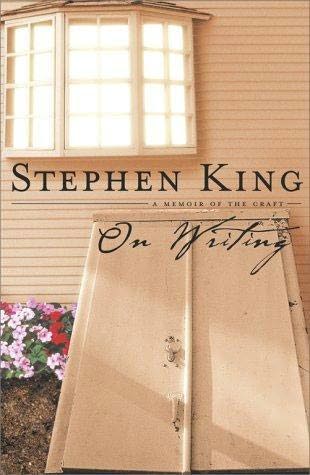
2. “On Writing” by Stephen King

The kindest, gentlest textbook on writing you could ever find, complete with examples, background on King and his formation as one of the finest craftsmen of his generation and genre, and samples of the tales that inspired him. I haven’t decided whether King went a little too light on the actual mechanics of writing, but the maxim of the entire art -— “a writer writes” -— is hammered home with authority and proven by the author himself. A true classic, a must-read for any interested in the craft and perhaps the easiest-reading self-help book of all time.

His approach to the creation aspect of penning a tale earned a place on my wall:

“You can approach the act of writing with nervousness, excitement, hopefulness, even despair -— the sense that you can never completely put on the page what’s in your mind and heart.
“You can come to the act with your fists clenched and your eyes narrowed, ready to kick ass and take down names.
“You can come to it because you want a girl to marry you or because you want to change the world.
“Come to it any way but lightly. Let me say it again: you must not come lightly to the blank page.”


3. “Tropic of Capricorn” by Henry Miller

I don’t think I liked it as much as Miller’s searing breakthrough book, “Tropic of Cancer,” but it was a fascinating, ironic look at the class division, evolution of industry and social mores of New York City in the 1920s. It’s a true gift to be able to pick up a book 70 years after it is written and still be able to appreciate the satire, humor and backdrop. It was a touch less controversial than “Tropic of Cancer,” but still forced readers to contemplate the world in a different way and fix their eyes on the seamy underbelly of society that they would prefer to remain averted to.

One of the dozens of memorable lines from the book include:

“My understanding of the meaning of a book is that the book itself disappears from sight, that it is chewed alive, digested and incorporated into the system as flesh and blood, which in turn creates new spirit and reshapes the world.”

So true, Hank. So true.


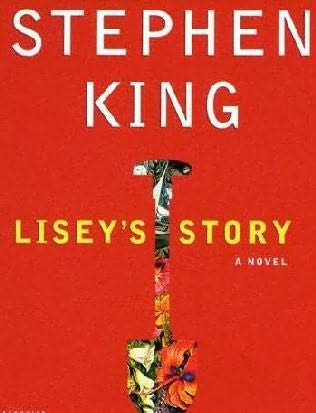
4. “Lisey’s Story” by Stephen King

I hesitated to include a second King book on such a short list, but I simply couldn’t exclude this memorable tale. Plus, I’m a relatively slow reader, so there’s only so many books I can get through in a year. I have a long list of books that are on my must-read list, but, with a tip of the cap to Herb Sendek, I just have to keep chopping wood and whittle it down.

In my opinion, “Lisey’s Story” is the image of a future imagined by King had he been killed by the van that ran him down in real life in 1999, and how his wife Tabitha may have had to try to deal with the fallout of his death. Morbid, I know, but hell ... this is Stephen King we're talking about, and that is the world he deals in. The book itself revolves around a famous novelist dying, leaving his wife to sort though his life’s work and discover a side of him that she never knew while he was alive. This novel deals a lot with the human psyche and the walls and barriers people erect to deal with the problems, experiences and issues that plague us all; a topic that has threaded itself through much of King’s recent work. It’s a very revealing book with a frantic pace and tone that relates to how time is alternately affected in a possible second world, leaving the reader to feel like they’re reading against the clock at times -— yet leaves you with no desire to have it end.


5. “Beach Music” by Pat Conroy

This was a really long novel, but highly enjoyable. Going strictly by prose, I wouldn’t consider Conroy a particularly memorable writer, but as a story-teller, he has few peers. Unfortunately for me, “Beach Music” read like a bunch of different short stories stuffed into a novel format, with some of the plot appearing to be too coincidental and far-fetched (it could have been alternately titled “The Amazing But True Adventures of Superhero Jack McCall”). Yet the story-telling reels you on in a number of levels, encompassing a wide range of controversial topics, from the Vietnam War to racism to the Holocaust to our legal system to Southern culture to religion.

One line jumped right off the page at me: “I wanted to warn her, to tell her that my love was all fury and sharp edges”; the writer in me wanted more of that, more sentiments that revealed depth of character. Prose, tone and believability are all subject to the personal preferences of individual readers, but you can’t argue with the fact that this a winner in terms of the pure magic involved in captivating a reader with a well-told tale.


*These weren’t books necessarily released in 2007 (obviously). They were merely the best ones that I got around to reading this year. Feel free to let me know if you agree, disagree, have other suggestions or just want to get jiggy with it.